



Maximizing Output: How Bottle Stack Mould Technology Redefines Injection Molding Efficiency
2026-05-06 15:47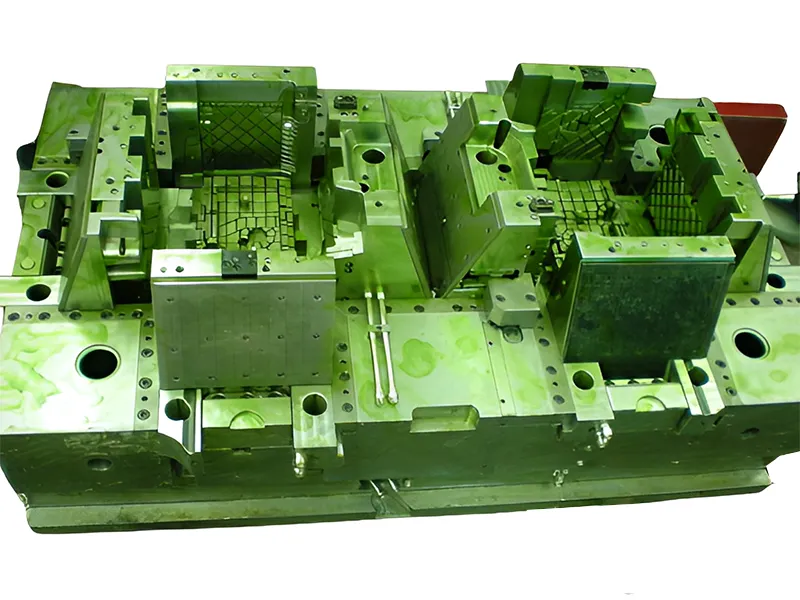
In high-volume plastic bottle production—spanning beverage, cosmetics, and household product industries—manufacturers face a persistent bottleneck: how to double or triple output without expanding floor space, increasing labor, or investing in additional injection molding machines. The answer lies in advanced bottle stack mould engineering. By vertically distributing cavities across multiple levels, this technology transforms a single injection cycle into a multiplied production event.
What Defines a Tandem-Mold System?
A Tandem-Mold represents the foundational layer of stack mould innovation. Unlike conventional single-layer molds that utilize merely 20% to 40% of an injection machine's rated capacity, a Tandem-Mold operates with cavities arranged on two or more parting lines. This configuration allows simultaneous filling, cooling, and ejection across all levels within one machine cycle. The result: production output scales proportionally with layer count—2 levels double the yield, 3 levels triple it—all without increasing clamping force requirements. For manufacturers running 24/7 production schedules, the Tandem-Mold reduces unit cost per bottle by up to 38%, based on cycle-time-to-output ratios documented in high-cavity molding environments.
T-Mold: The Two-Level Production Accelerator
The T-Mold, a widely adopted two-layer variant, serves as the entry point into stack mould technology for many operations. A standard T-Mold configuration doubles cavity count while maintaining compatibility with existing injection units, provided the machine's maximum opening stroke and plasticizing capacity are verified during the design phase. Key technical specifications must be validated: the main nozzle must remain properly guided post mold-opening, and the injection rate requires measured adjustment to ensure consistent melt delivery across both parting lines. When a manufacturer processes 500ml cosmetic bottles, a single T-Mold can match the output of two standalone single-layer molds, effectively halving labor allocation and machine footprint.
Expanding Capabilities with the Common Stack Mold
For applications demanding more than two levels, the Common stack mold extends the stacking principle to 3, 4, or up to 10 layers. This multi-level mould architecture is particularly advantageous for lightweight, thin-wall packaging common in medical and daily necessity sectors. However, design complexity escalates with each added layer: hot runner melt decompression becomes critical, cavity layout must balance flow distances, and injection unit pre-plasticizing efficiency must meet the multiplied material demand. A properly engineered Common stack mold operating at 6 layers can produce over 36,000 bottle preforms per hour on a single 450-ton press, demonstrating why multi-level mould investments typically achieve ROI within 12 to 18 months for operations exceeding 10 million units annually.
Rotating Stack Mould: Precision in Multi-Material and Overmolding
When production requires simultaneous multi-material injection or overmolding, the Rotating stack mould introduces mechanical rotation between layers. Configurations include double-sided 180-degree rotation, double-layer four-sided 90-degree rotation, and hybrid setups combining both rotation angles across three layers. The Rotating stack mould technology enables sequential injection of barrier layers, color combinations, or soft-touch grips directly within the stack structure, eliminating secondary assembly steps. The rotating mechanism must be synchronized with the injection sequence to maintain cavity alignment tolerances within 0.02mm, ensuring consistent part quality across all rotating positions.
Design Considerations for Multi-level Mould Deployment
Successful implementation of any multi-level mould requires addressing six critical design factors:
main nozzle length and mold opening stroke must keep the nozzle within the guide sleeve post-opening;
maximum opening stroke and plasticizing capacity of the target injection molding machine must be verified against stack height calculations;
injection device pre-plasticizing efficiency must exceed material demand by a minimum safety margin of 15%;
injection rate must be calibrated upward to compensate for increased runner volume across multiple parting lines;
hot runner melt decompression protocols prevent stringing and drool between cycles;
cavity layout geometry must maintain balanced filling across all levels.
These parameters, when engineered correctly, ensure that a multi-level mould—whether a Tandem-Mold, T-Mold, Common stack mold, or Rotating stack mould—delivers the multiplied output it is designed to achieve. Application scope continues to expand: historically concentrated in packaging and household goods, multi-level mould deployments now penetrate automotive component production, where high-cavitation stack tools mold interior trim parts with cycle time reductions verified at 45% compared to conventional single-plane tooling.
Partner with Proven Stack Mould Engineering
Prosperity Technology Development Co., Ltd., established May 25, 2012, is a Hong Kong wholly owned enterprise specializing in high-end export mold manufacturing for European and American markets. Our engineering team brings decades of combined experience in Tandem-Mold, T-Mold, Common stack mold, Rotating stack mould, and multi-level mould design and production. We operate dedicated mold and injection workshops, supporting clients from technical consultation through to full-scale production deployment.
Contact us for technical consultation or bulk quotes:
Mobile: +86-13641431160
Tel: +86-755-23638965
Fax: +86-755-26076378
Email: spark@prosperitymould.com