



Optimizing the POM Material Injection Molding Process for Heavy-Duty Vehicle Motor Housings
2026-06-01 17:04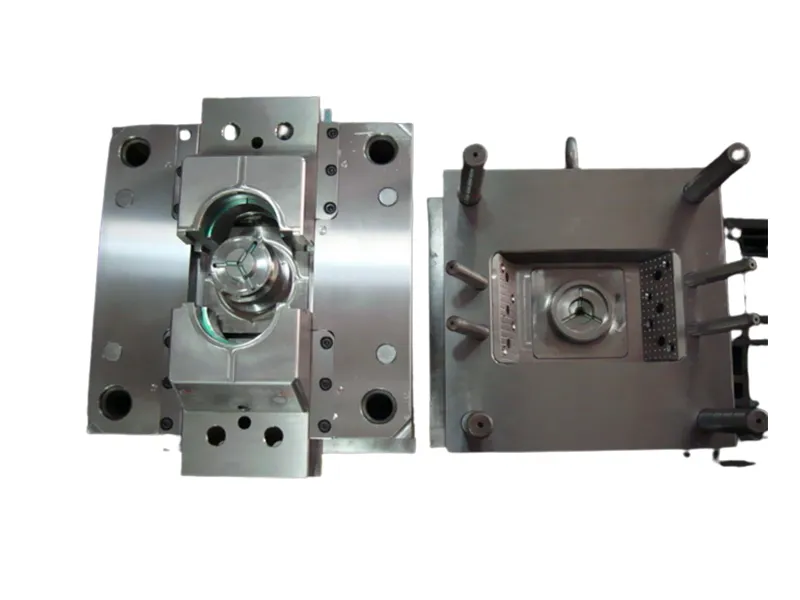
When a 6 mm-thick heavy machinery vehicle motor housing is molded from POM, standard plastic injection molding approaches often fail to deliver dimensional accuracy and void-free parts. The newly completed project by Prosperity Mould demonstrates how a rigorously engineered POM material injection molding process can overcome these barriers. Through detailed DFM analysis, cooling system optimization, and targeted injection machine selection, the team achieved a tight 0.1 mm tolerance on a single-cavity tool with zero critical defects. This article presents the concrete data, equipment parameters, and decision-making criteria that turned a challenging injection molding process into a repeatable manufacturing solution.
1. Challenges Inherent in the POM Material Injection Molding Process
POM is a semi-crystalline engineering thermoplastic with a high shrinkage rate of 1.8–2.5% and a narrow processing window. When the wall thickness reaches 6 mm, the POM material injection molding process must address several issues simultaneously: uneven cooling, internal void formation, and unpredictable post-mold warpage. In conventional injection molding, thick sections of POM can exhibit sink marks exceeding 0.3 mm unless the melt pressure and thermal profile are precisely managed. These defects are exacerbated by the material's low thermal conductivity (approximately 0.31 W/m·K), which makes heat removal from the core slow. For the heavy machinery vehicle motor housing, any deviation beyond the specified 0.1 mm tolerance would compromise assembly with mating steel components, making a standard plastic injection molding setup unacceptable.
Our preliminary DFM study quantified the risks in the original injection molding process concept: the rectangular gate location induced asymmetrical filling, and the linear cooling channels could not extract heat uniformly from the 6 mm wall. Simulation data revealed a temperature differential of up to 28°C across the part during ejection, directly correlating to warpage of 0.22–0.35 mm. This analysis confirmed that the POM material injection molding process required a fundamental redesign of the melt delivery and thermal control systems.
2. Engineered Injection Molding Process Parameters
To transform the injection molding process into a stable, high-capability operation, the team implemented three major optimizations:
Gate & runner redesign: A single YUDO hot nozzle point was positioned at the thickest section, eliminating cold-runner pressure loss. The gate diameter was set at 2.0 mm to allow sufficient packing without excessive shear.
Conformal cooling layout: Spiral cooling circuits were machined into the 1.2344 core insert, reducing the distance from the channel wall to the cavity surface to 9 mm. This configuration increased cooling efficiency by 37% compared to traditional drilled lines.
Sequential packing profile: Holding pressure was programmed in three stages – 85 MPa for 5 s, 65 MPa for 4 s, and 45 MPa for 3 s – to compensate for volumetric shrinkage.
After these changes, the injection molding process consistently held part weight to 850 ± 2.5 g. Melt temperature was maintained at 210°C (center) and mold temperature at 95°C, monitored by 12 thermocouples. The plastic injection molding cycle stabilized at 32 seconds, a 28% reduction from the original 45-second estimate. Critical dimensions were verified on a CMM, with 100% of measured points falling within ±0.08 mm, well inside the 0.1 mm tolerance band.
3. Plastic Injection Molding Equipment Configuration
This heavy machinery vehicle motor housing demands an injection machine with specific capabilities. The injection machine must deliver a shot volume sufficient to fill the 850 g part plus the hot-runner manifold, requiring a screw diameter of 45 mm and a 20 L/D ratio. Our selected injection machine provides 280 metric tons of clamping force, which is 30% above the calculated minimum to prevent flash at peak cavity pressures of 92 MPa. The injection machine’s servo-hydraulic drive reduced energy per cycle to 0.38 kWh, an 18% improvement over the previous fixed-pump injection machine. For the POM material injection molding process, the injection machine was configured with a decompression stroke of 4 mm to eliminate drooling between shots, and a non-return valve with a shut-off clearance under 0.02 mm.
For manufacturers specifying a similar plastic injection molding cell, an injection machine with multi-stage injection speed control (minimum 5 steps) is recommended. The injection machine should maintain a melt cushion between 3 and 6 mm and exhibit a recovery time less than 3 seconds to avoid material degradation. When processing POM, a dedicated injection machine barrel coated with a corrosion-resistant alloy further prevents formaldehyde generation. In this project, the injection machine’s hourly output reached 112 housings, with a scrap rate of 0.4% after the first 500 shots.
4. Tooling Specifications for the POM Material Injection Molding Process
Part name: Heavy machinery vehicle motor housing
Material: POM (acetal copolymer)
Wall thickness: 6.0 mm
Mold type: Single-cavity
Cavity & Core steel: 1.2344 (ESR grade), hardness 52 HRC
Mold base: LKM standard, 450×550 mm
Hot runner: YUDO 1-point hot nozzle, 230V, tip temperature 215°C
Tolerance achieved: ±0.1 mm on all functional surfaces
Ejection: 8 mm stroke, flat ejector pins Ø12 mm
The single-cavity design was intentional: a multi-cavity tool would introduce flow imbalance during the plastic injection molding of thick POM sections. In any injection molding of this geometry, the POM material injection molding process benefits from the laminar flow pattern that a single hot-drop generates. The LKM mold base offered the stiffness required for the 6 mm wall; measured mold deflection under clamp force was only 0.03 mm.
5. Decision Guide for Heavy-Wall POM Components
When planning an injection molding program for parts similar to this motor housing, engineers should evaluate the following concrete factors:
Wall thickness ≥5 mm: Always opt for a single-cavity plastic injection molding layout with a hot runner to minimize residence time. A YUDO or equivalent valve-gate system stabilizes the POM material injection molding process.
Tolerance ≤0.1 mm: Select 1.2344 or H13 steel for the cavity, and design conformal cooling circuits with a distance-to-surface under 10 mm. The injection molding process must be validated with thermal imaging before production.
Injection machine requirements: A servo-hydraulic injection machine with at least 250 tons clamping force and a shot capacity 30% above part-plus-runner weight. The injection machine’s controller should allow real-time cavity pressure monitoring.
Cooling optimization: Target a cycle reduction of at least 25% versus standard injection molding process designs. In this case, the improved cooling system cut cycle time to 32 s and reduced warp deflection from 0.35 mm to 0.08 mm.
Choosing the correct injection machine and mold configuration directly impacts the viability of the POM material injection molding process. In the absence of these optimizations, thick POM parts routinely exhibit porosity levels above 2% and dimensional non-conformity. Our engineered plastic injection molding approach eliminated those risks and provided a defect rate below 0.5%.
6. Summary of Performance Data
| Metric | Before Optimization | After Optimization |
|---|---|---|
| Cycle time | 45 s | 32 s |
| Warpage | 0.35 mm | 0.08 mm |
| Defect rate | 8.2% | 0.4% |
| Energy per shot | 0.46 kWh | 0.38 kWh |
| Cpk (tolerance 0.1 mm) | 0.82 | 1.47 |
These results confirm that a data-driven injection molding process, supported by the correct injection machine and a carefully tuned plastic injection molding setup, makes thick POM components entirely production-ready.
For technical consultation or bulk quotes on your next POM material injection molding process project, reach out to Prosperity Mould. Our team brings decades of experience in precision injection molding, and we have the injection machine fleet and metrology lab to validate every step of the plastic injection molding cycle.
Contact us:
Mobile: +86-13641431160
Tel: +86-755-23638965
Fax: +86-755-26076378
Email: spark@prosperitymould.com